Old Ben
Young Captain Jack · The Son of a SoldierOld Ben is the former enslaved man whose loyalty and practical courage give the story one of its most reliable centers of action. Once enslaved on the Ruthven plantation, he becomes the keeper of a boathouse on the Atlantic bay and the person most closely associated with the shipwreck that brought Jack Ruthven into the Ruthven family. He rows, tracks, feeds, guards, fights, and rescues; again and again, the narrative’s emergencies reveal that his knowledge and judgment are indispensable, even when the surrounding social order treats him as subordinate.
Identity and Background
Old Ben is introduced through the coastal boathouse that stands on the shore of a wide bay overlooking the Atlantic Ocean. The building belongs to him, and its position makes him a natural guide to the waters, the wreck on Hemlock Bluff, and the difficult shoreline around it. His history reaches back to the Ruthven plantation, where he had once been enslaved. That past places him inside the racial and economic structure of the Old South, but it does not define the full measure of his character. His conduct gives him an authority that the formal hierarchy does not grant him.
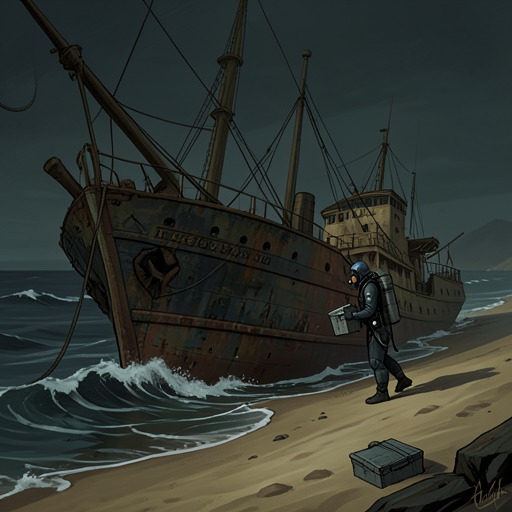
His connection with Jack Ruthven begins with the wreck. As Jack later recalls, Old Ben was still enslaved at the time and had gone out onto Hemlock Bluff to watch the distressed vessel. A signal gun announced that the ship was in danger; the vessel then appeared amid violent waves, while its captain and crew were lost in the ocean. The wreck becomes the hidden origin of Jack’s life with the Ruthven family, and Old Ben is the living witness who links that disaster to Jack’s adoption. Years later, when Jack’s place in the family is challenged, Old Ben insists that Jack is a young gentleman and that his father was one as well, defending Jack’s dignity against attempts to reduce him to a nobody or merely an adopted son.
Service to Jack Ruthven and the Ruthven Household
Old Ben’s loyalty is expressed less through declarations than through immediate, practical care. When Jack rows away toward the wreck and fails to return, Old Ben notices his absence, understands that he may be stranded, and crosses the water through the rain with a market basket of food from the plantation. He arrives soaked, with water streaming from his clothing, but his discomfort is secondary to Jack’s safety and hunger. The episode defines his guardianship: he observes closely, interprets danger quickly, and acts before anyone else has to direct him.
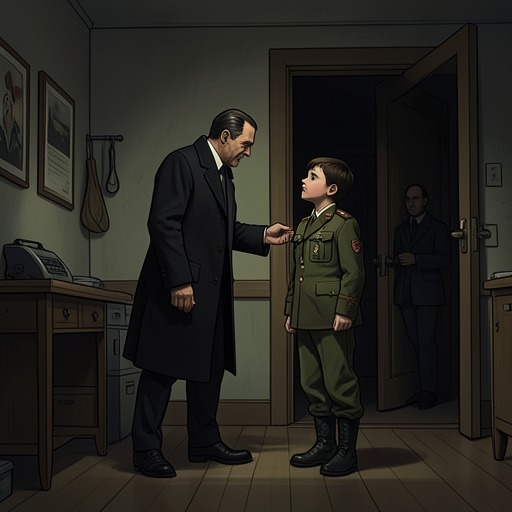
He also serves as a guide to Jack’s hidden past. When Dr. Mackey arrives and claims knowledge of Jack’s parents, Old Ben is willing to lead him to the boathouse because he recognizes that Jack will want to meet someone who knew his father and mother. Yet this willingness is not naïve submission. Old Ben has already shown that his loyalty is personal and protective rather than mechanically obedient. When Dr. Mackey’s purposes become dangerous, Old Ben becomes one of the people who helps prevent the surgeon from controlling Jack’s fate.
The protection is reciprocal in the most dramatic sense. During Jack’s rescue of another imperiled person, Jack tells the person to take hold of his shoulder and promises to save them. Old Ben’s later conduct mirrors that same ethic of physical responsibility. He helps defend Jack when danger comes directly to him, and he remains available when the household needs a tracker, guard, or fighter. His bond with Jack therefore exceeds the language of service: it is a master-servant relationship transformed by affection, dependence, and repeated acts of lifesaving courage.
Courage, Combat, and Resistance
Old Ben’s courage becomes unmistakable when violence reaches the Ruthven property. At the stable, he and two Home Guard boys fight three guerrillas who are attempting to steal several horses. The struggle leaves Old Ben wounded in the shoulder, but his response is restrained; when asked about his condition, he reports that he is not badly hurt and goes to the house to have the wound bound. The scene places him physically inside the defense of the household rather than at its margins. He is not merely an attendant who summons help after a crisis; he is one of the people who confronts the attackers.
His readiness to resist is also visible in the account of Dr. Mackey’s encounter with Jack. Old Ben says that he had the surgeon covered with his old horse pistol and that any attempt to strike Jack would have ended the rascal’s action immediately. The weapon is old, but the threat is decisive. His protection rests on alertness and judgment: he recognizes the moment when words have ceased to be enough and keeps violence from being used against Jack.
Old Ben’s martial value is not limited to a firearm. He is described as good at trailing, which makes him especially useful in a landscape of raids, flight, and guerrilla warfare. Later, when Jack declares that the surgeon must be made a prisoner, Old Ben is the ally summoned to help carry out that objective. In the final confrontation, he contributes to the escape that frees both himself and Columbus Washington after they have been restrained. His actions demonstrate that his strength lies in a combination of local knowledge, physical endurance, courage under pressure, and loyalty to a clearly chosen cause.
The narrative also places his skill in a wider communal struggle. When Columbus Washington praises a shot that appears to have killed an enemy, the moment confirms that Black characters are not passive objects of wartime protection. Old Ben and Columbus Washington participate in armed resistance, defend property and people, and make decisions that affect the outcome of the conflict. Their abilities are essential even though the story’s inherited language and social arrangements continue to mark them by race.
Relations, Recognition, and the Struggle over Jack’s Identity
Old Ben is one of the strongest witnesses to the truth of Jack’s origins, although his knowledge initially operates through memory and personal testimony rather than a complete legal record. He remembers the shipwreck and the circumstances under which Jack was saved. He also knows enough about Jack’s parents to understand that Jack’s identity cannot be settled by the accusation that he is a nobody. When Marion Ruthven explains that Jack was adopted as a child and is now her brother, Old Ben’s earlier defense of Jack gains fuller significance: he has been protecting not only a young man’s safety but also his claim to respect.
His testimony stands against the social degradation implied by the insult directed at Jack. Old Ben rejects the idea that Jack’s uncertain family status makes him worthless. At the same time, the story shows the limits of the world in which Old Ben must act. Even after emancipation becomes part of the changing wartime order, other characters continue to address him through racialized forms of speech and to frame his usefulness in terms of service. The contrast is central to his characterization: the narrative grants him exceptional practical authority while preserving the paternalistic vocabulary of the society from which he emerged.
Old Ben also helps connect the living household to the material clues of the past. The shipwreck, the clothing recovered from the infant, the lace handkerchief, the wedding ring, and the black-painted tin box all belong to the chain of evidence through which Jack’s identity is reconstructed. He is not the sole interpreter of these objects, but his knowledge of the wreck and his relationship to the Ruthvens make him part of the chain that keeps the past from disappearing. His presence gives the investigation a human witness whose memory is rooted in action rather than speculation.
Later Actions and Narrative Significance
When the household is threatened during the war, Old Ben remains a trusted protector. Mrs. Ruthven seeks him out while he has his shoulder bandaged, showing that his injury does not erase his importance. He is consulted about pursuit and escape, and he is specifically recommended as a person who can trail fugitives. Even when events separate him from Jack, the story continues to treat him as a dependable resource whose knowledge can reopen a path through dangerous territory.
His endurance is tested under captivity. Dr. Mackey harshly confronts the Black men who are helping Jack escape and identifies Old Ben as the man who saved Jack years earlier during the shipwreck. The recognition is revealing: even an enemy understands that Old Ben’s relationship with Jack is founded on a decisive act of rescue. After Jack frees himself, he releases Old Ben and Columbus Washington as well. Old Ben’s liberation is therefore bound to Jack’s own escape, making their shared release a concrete expression of the bond formed at the beginning of Jack’s life.
Old Ben’s assistance also contributes to the recovery of the wreck’s buried evidence. The outlaws’ camp is searched, and among the stolen valuables is the black tin box taken from the wreck of the Nautilus. The box and its contents are eventually turned over to Colonel Stanton. Although Old Ben does not personally interpret every document, his knowledge of the wreck and his participation in the struggle against the people who removed the box help bring the evidence back into the hands of those who can establish the truth.
In the closing movement of the conflict, Jack and Old Ben work together to make Dr. Mackey a prisoner, and Old Ben is ordered to ensure that the surgeon does not escape while Mrs. Ruthven speaks privately with Jack. This final assignment condenses his narrative role. He is the guard who holds the boundary, the tracker who can pursue, the witness who remembers, and the protector whose loyalty survives danger, social change, and the competing claims made upon Jack. Old Ben’s significance lies in the fact that the story repeatedly proves his worth through action: a man once held as property becomes the indispensable defender of a family, a child, and the truth of a buried past.